
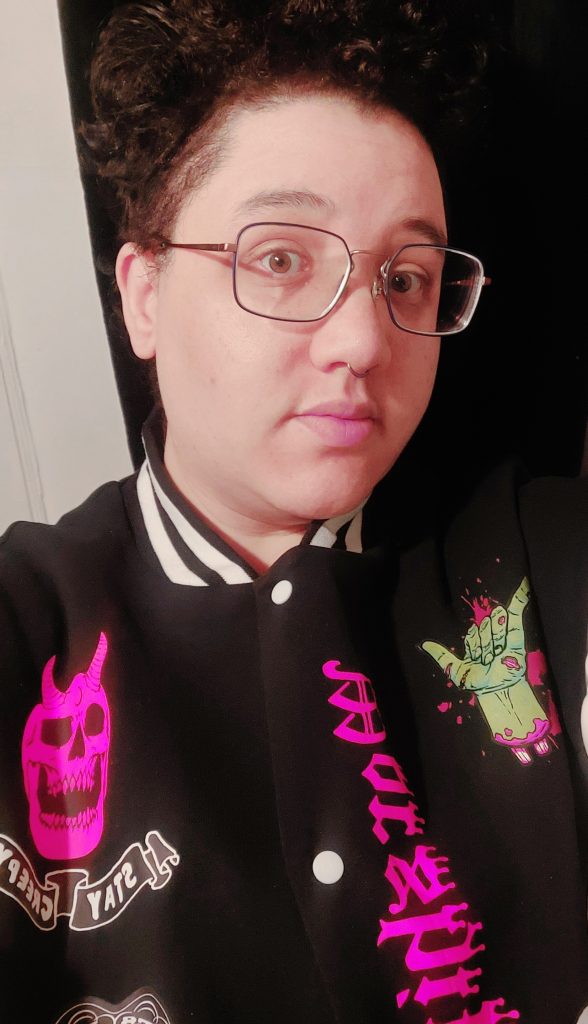
Tas (they/we) is a neurodivergent writer & published author. They are autistic, disabled, a medically diagnosed DID system, a person of color, nonbinary, queer, and proud. They have a passion for equal access and human rights. They advocate for inclusion, equal access, and acceptance of neurodiversity & disability. Primarily their advocacy is focused on higher education and workplace accommodations/navigation.
Website: https://tasthewriter.com/
Linktr.ee: https://linktr.ee/tasthoughts
Intersectionality impacts autistic people all over the world. A sensitive topic that is not often discussed is autism and religious trauma.
The lifelong effects of religious trauma on the mind are just now starting to be explored. While a spiritual belief can help heal trauma, it can also cause it.
Defining Religious Trauma
The Global Center for Religious Research defines religious trauma as something that
“results from an event, series of events, relationships, or circumstances within or connected to religious beliefs, practices, or structures that is experienced by an individual as overwhelming or disruptive and has lasting adverse effects on a person’s physical, mental, social, emotional, or spiritual well-being.”
Any type of trauma that occurs because of its ties to religion is religious trauma.
Religious trauma includes, but is not limited to:
- Forcing certain rituals or routines that you are adverse to
- Sexual abuse by those in authority or members of your collective
- A harmful ideology that is radicalized and dangerous physically and mentally
- Being trapped in a cult or extremely restrictive belief system that negatively impacts your emotional and physical wellbeing
- Bullying by members
Certain types of religions have a stigma around restrictive requirements and abuse of their members. Cult is a word that is thrown around in the popular culture. It does not apply to every religion or belief system. Yes, cults are dangerous and a large part of the religious trauma dialogue. But just because you are not stuck in a cult or in a religion that is restrictive doesn’t mean you aren’t experiencing religious trauma as an autistic person.
Autistic Religious Trauma
Many neurotypical parents are adverse to their autistic children and seek to change or “improve” their behaviors. The desire for a “normal” child increases the intensity of religious conformity. The lack of acceptance of the autistic neurotype makes participating in a religious belief system even more intense and difficult. Using religion as a punishment for autistic traits and using it to force certain social behaviors is an issue.
The stakes are already high for the child on a social, cognitive, and emotional level.
Some of the dangers for autistic children:
- They are more vulnerable to predators.
- The need for masking may increase and cause internal stress.
- Autistic children may not learn the ideology as quickly or practice it as efficiently as neurotypical children.
- There may be punishment for behaviors that are deemed inappropriate, but are just part of being autistic, like stimming, social awkwardness or avoidance, or not developing reading, speaking and other skills that are present in neurotypical children.
Autistic children are sometimes punished for their innate behavior. Religion often provides a gateway for excessive punishment by serving as an excuse to abuse, shame, or control others. Even if the punishment is being grounded or a time out, the child is learning that being autistic is wrong because religion says so. An experience of an autistic individual was published in Neuroclastic, 2021, in an article titled Autism and Religion: A silent anxiety. The author explains that hearing that hurting others is a sin puts him in a constant state of shame every time he makes a mistake. The fear of damnation gave him horrible anxiety.
The autistic mind does not work like a neurotypical mind. Some things are seen as absolutes; there is no gray area.
Getting Support
Whether or not you stay in the religion you were raised in, you need support to heal from religious trauma.
The steps to healing include:
- Self-validating that you are experiencing religious trauma.
- Introspection and self-awareness are your allies in this journey.
- Remember that you may have implicit ableism. This means you will discount your feelings and invalidate them.
- Self-exploration of your autistic identity will help you overcome this barrier.
- Speaking with a counselor may be a good option for you. As an autistic adult, it can be difficult to find a counselor best fitted for neurodivergence. Take your time and interview them. You don’t have to stick with the very first one you find.
As medical professionals uncover more about how religion-induced trauma impacts the mind, more supportive resources will immerse. If you are autistic and have experienced trauma as a result of a spiritual belief- you are not alone and you are valid.
Sources:
https://www.gcrr.org/religioustrauma
https://www.choosingtherapy.com/religious-trauma-syndrome/
Ava